
“We are aware”, the participant acknowledged awareness of the systemic barriers undermining girl child education across the six states. These barriers include inadequate infrastructure, poor hygiene facilities, overcrowded classrooms, and chronic underfunding. More critically, they pointed to the gender-blind nature of state budgeting processes, which fail to prioritise or address the unique needs of girls in education planning and resource allocation. While some agreed to the lack of specific line items, some believe that the line items are there.
Stakeholders as the Backbone of Advocacy
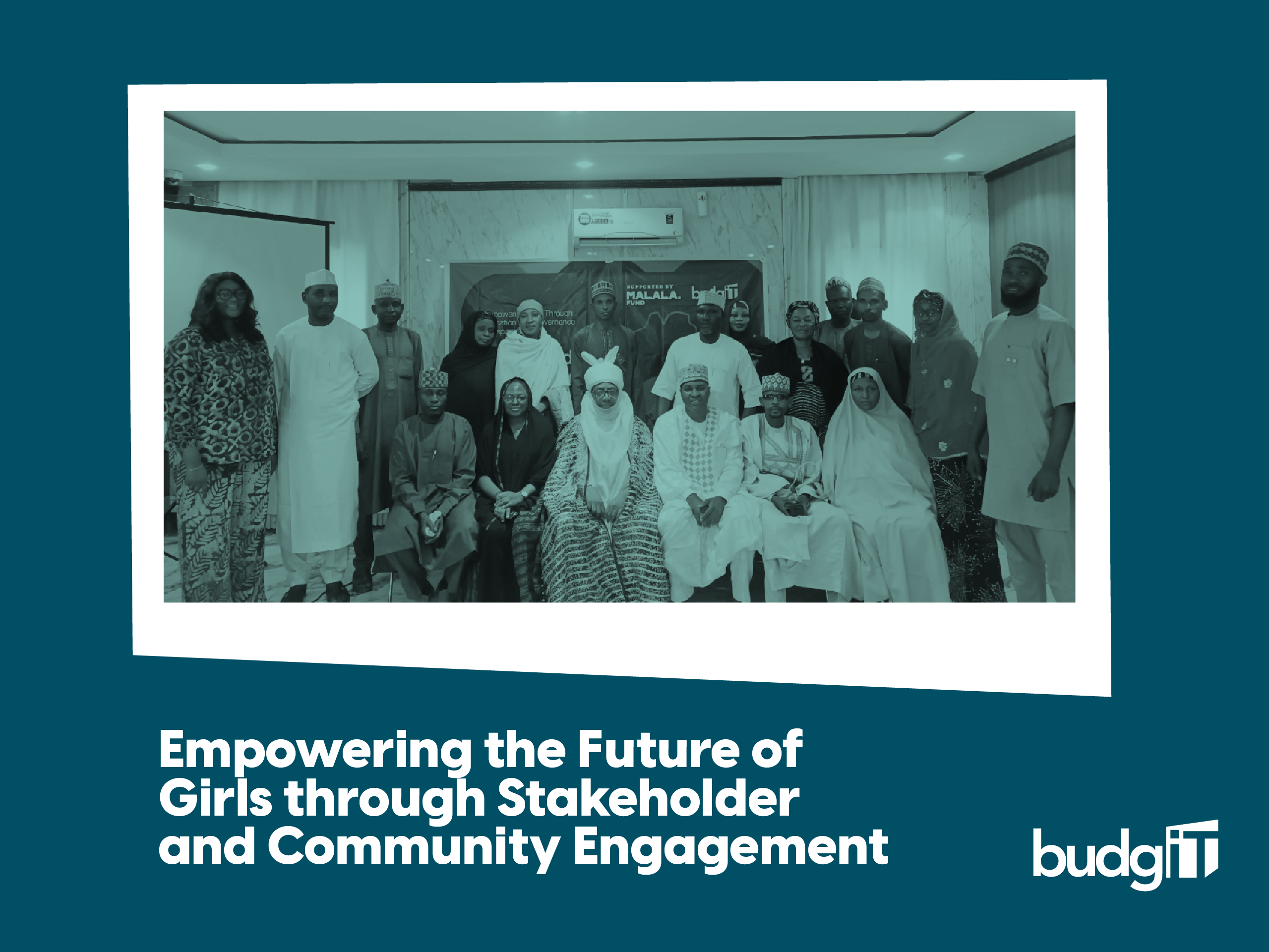
Between the end of Q1 and throughout Q2 2026, BudgIT Foundation engaged in field visits across six states: Adamawa, Bauchi, Borno, Kaduna, Kano, and Oyo. During these visits, the organisation convened with stakeholders, including policymakers, public officials, school principals, community and religious leaders, and parents. The purpose was not only to communicate but also to deepen understanding and strengthen advocacy for the girl child, particularly those unable to champion their own cause. These are girls who value education yet remain constrained by poverty, insecurity, disability, and entrenched socio-cultural barriers that systematically limit their access to learning opportunities. The objectives, though seemingly straightforward, were layered and complex: to secure increased funding for girl child education, to institutionalise dedicated budget line items specifically targeting girls’ educational needs, to ensure the construction and provision of WASH facilities across schools in the states, and to embed data-driven policymaking. This meant not only boosting enrolment but also sustaining retention and enabling reentry for girls whose education is disrupted. Throughout these months, BudgIT Foundation convened these stakeholders to achieve collaborative support in achieving these goals.
The Path Forward: One State at a Time
Across all six states, despite their unique contexts and tailored strategies of engagement, one common thread emerged: the urgent and undeniable need to increase allocations for girl child education. Whether through legislative action, community mobilisation, leadership commitments, or citizen oversight, each state’s efforts pointed to the same conclusion: without significantly expanded and dedicated funding, the aspirations for improved enrolment, retention, and reentry of girls into schools will remain constrained.
In the states, allocations to girls’ education are concerning. Adamawa and Bauchi both hovered below 1%, with occasional small allocations like N670mn (0.95%) in Adamawa for 2024 and N225m (0.97%) in Bauchi for 2024. Oyo State, however, recorded 0% every year, making no direct investment at all in girl-child education. A brighter but complicated story emerges in Borno State, where allocations reached as high as 32.21% in 2023 and 20% in 2025. Yet, these figures were largely sustained by external grants from UNICEF and AGILE (Adolescent Girls Initiative for Learning and Empowerment), raising concerns about sustainability. Similarly, Kaduna State showed fluctuations, with a high of 12.94% in 2022, but dropping to almost nothing in 2025. Again, much of this depended on grants rather than the state’s own resources. In Kano State, allocations varied but remained modest, peaking at 5.03% in 2022 before settling back to around 1–2% in later years. This still represented more effort than states like Oyo, Adamawa, or Bauchi, but far below the recommended threshold.
Across the engagements, a clear picture emerged: while contexts differed, the challenges and aspirations converged. Stakeholders consistently highlighted the importance of moving from visibility to action, ensuring that legislative commitments and policy pronouncements are translated into tangible budgetary allocations. For instance, some administrative bottlenecks, such as reliance on counterpart funding. Education was repeatedly framed as central to rebuilding and resilience, especially in communities scarred by insecurity and displacement. Stakeholders emphasised that deliberate investment, stronger accountability, and community-driven support are essential if progress is to be sustained. Detailed recommendations surfaced around mobilising traditional and religious leaders, creating second-chance education pathways for girls who had dropped out, and repairing broken communication chains between education boards and school-based committees. Independent budget tracking and expenditure monitoring were seen as critical tools to apply external pressure for accountability. Leadership commitments were also evident, with pledges of resources, interim facilities, and logistical support to ease girls’ access to schools. Yet the consensus was clear: these commitments must be backed by dedicated budget lines, transparent resource flows, and monitoring mechanisms to ensure that allocations reach their intended beneficiaries.
Citizen participation and oversight emerged as another cornerstone; recommendations focused on structured platforms for women and youth groups to contribute meaningfully to budget formulation, while school-based committees were identified as accountability agents to be strengthened through training and sensitisation.
What Must Happen for Girls?
Taking a look at the numbers, these states have less than 5% capital expenditure allocation towards girl child education. The state’s budget contains no gender-disaggregated data, making it impossible to determine whether any portion of education funds directly benefits girls at all.
It is imperative that, first, dedicated budget lines must be established, not as vague intentions but as ring-fenced allocations with clear targets and transparent tracking. At a minimum, 15% of capital education expenditure should be directed toward initiatives that directly benefit girls. This should not end at allocation; implementation must also be taken with all sense of commitment.
Second, gender-disaggregated data must become standard practice. Budgets should be broken down by gender, and every progress report must include metrics on enrollment, retention, and completion. Without data, accountability cannot exist.
Also, infrastructure gaps must be closed urgently. WASH facilities must be built and maintained, school buildings completed, and learning materials reliably provided. The schools and communities identified during engagements must receive immediate support.
The Choice Ahead
Every month that a girl remains out of school is a month she cannot recover. Education is not a static good; it is an accumulation. Every girl child has the right to 12 years of basic education. Investing in girls’ education is not merely a social imperative; it is a strategic investment with profound implications for economic development and the long-term sustainability of society. Now that the convenings have taken place, the knowledge exists, the community relationships exist, and the institutional frameworks exist. What is missing now is the political will and financial commitment to activate them.