
Primary Health Care (PHC) is the foundation of a successful healthcare system. It aims to provide accessible, affordable and community-based health services that meet the majority of people’s health requirements. PHC services encompass preventative, promotional, curative, rehabilitative and palliative care.
Nigeria’s primary healthcare system, on paper, is one of the most ambitious in the country, with over 30,000 primary health centres (PHCs) and a dedicated funding mechanism, the Basic Health Care Provision Fund (BHCPF). In practice, however, the system has long been plagued by poor service delivery, inadequate staffing, crumbling facilities, and a chronic absence of accountability. The question is no longer whether the government has made commitments; it is “are those commitments being fulfilled?” That is precisely where technology is changing the game.
The Problem: Commitments Without Consequence
For decades, the gap between health budgets and actual grassroots delivery has been vast. Funds meant for PHCs frequently disappear before reaching their destinations. Facilities remain dilapidated, essential medicines go unstocked, and those who pay the price are almost always people with low incomes, the rural and the vulnerable.
Behind this reality lies a deeper, structural problem. There has been no reliable way for citizens or institutions to see what is happening on the ground as it unfolds. The trail goes cold quickly; data is scattered, difficult to access, or already outdated by the time it surfaces. In that absence of visibility, accountability slips through the cracks and the cycle continues.
BudgIT’s (Strengthening Health System Unit) work in the health sector is grounded in the belief that data drives true accountability. By leveraging technology, the organisation turns this belief into action, promoting transparency and accountability across the sector.
Introducing the PHC Accountability Tracka
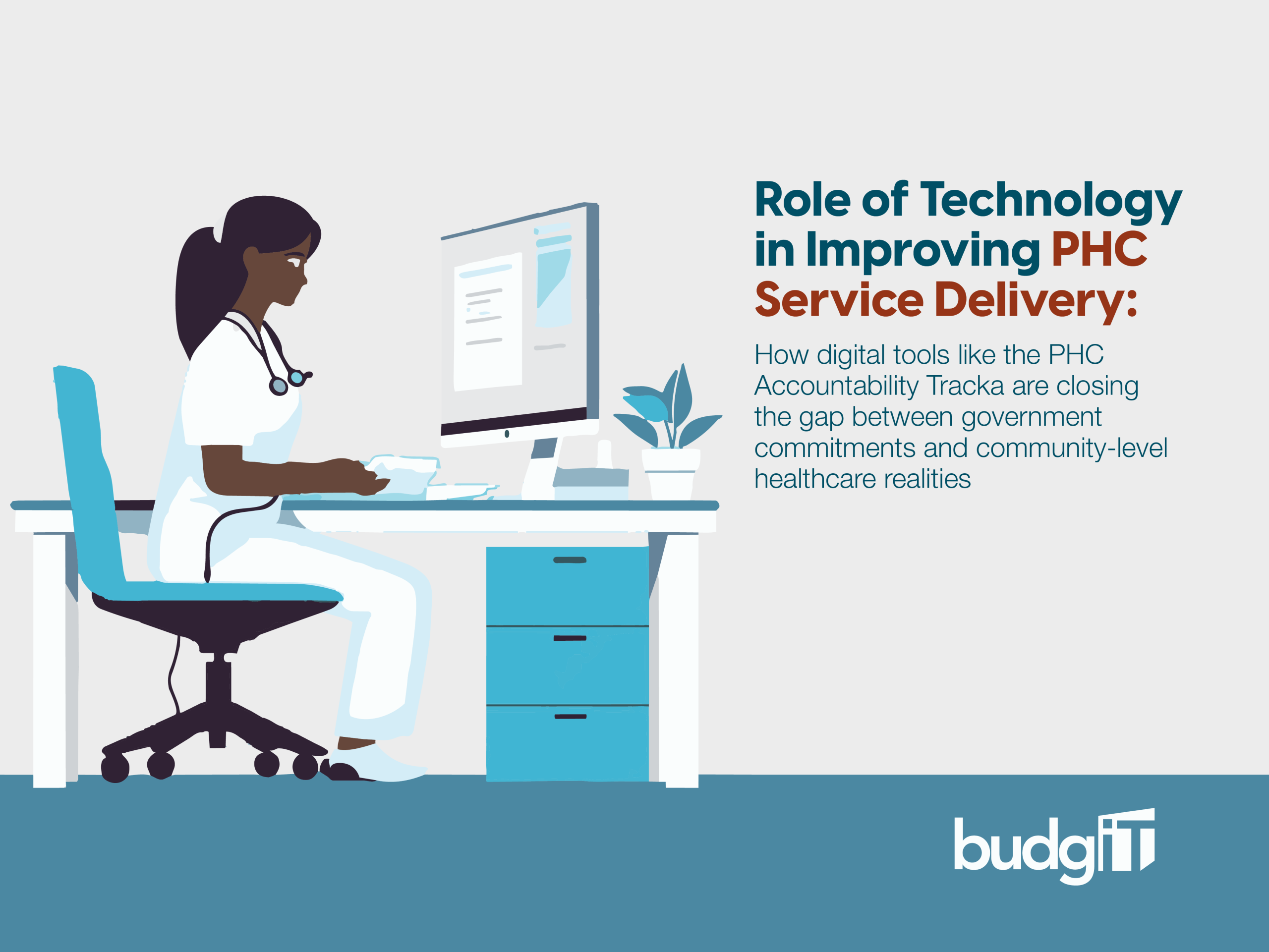
The PHC Accountability Tracka is a digital platform developed by BudgIT Nigeria to track and monitor the condition of PHCs across the country. Built as a springboard for accountability tools, the platform makes it possible, for the first time, for citizens, civil society actors, journalists and state governments to see, in near real time, how primary health facilities are functioning, where funds are being deployed and where they are not.
The PHC Tracka works on multiple levels. Patients and Citizens can locate any PHC in their community, upload photographs of the facility and submit detailed reports on its condition, describing what is lacking, what is broken and what actions they believe are needed. These community-generated reports are not simply beneficial: they are the budding flowers of community-led action and the foundation for evidence to seek accountability from the government.
This portal has recorded feedback in the form of 172,015 individual hits, which assesses facility readiness, quality of service delivery and client satisfaction, including a section for community feedback to assess the facility’s response towards the community.
This feedback is displayed on the site’s dashboards, giving stakeholders a live view of PHC conditions across their territories. In the context of strengthening health systems, feedback is collected, grouped into different thematic areas and used to engage various health stakeholders. Advocacy groups can extract quality data on primary healthcare financing to strengthen engagement with policymakers. Community-based organisations can and do utilise the feedback during sensitisation, town halls and focus group sessions, creating awareness and inclusive participation in their respective health facilities. Facility in-charges have an unbiased insight into the community’s needs and perceptions of service delivery, highlighting areas for improvement and government stakeholders can identify recurrent issues that negatively impact health outcomes for immediate action.
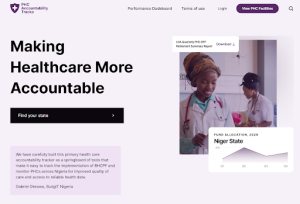
Landing page of the PHC Tracka:www.phctracka.org
Closing the Loop Between Citizens and the State
What sets PHC Tracka apart is its feedback architecture. When a community member reports a facility with no drugs, no midwife, or a collapsed roof, etc., that report doesn’t vanish into an administrative void. It is visible to state and federal officials, creating a digital paper trail that generates real pressure for response. This interface between citizens and government institutions reflects BudgIT’s core belief in accountability. Money flows from the government to institutions; information must flow back. Breaking either side renders the other meaningless. The PHC Tracka closes that loop.
Technology as a Health Equity Tool
The implications extend beyond accountability in the narrow sense. When PHC conditions are tracked and published, patterns of neglect become visible. Communities that have been systematically underserved can now point to evidence, not just tales for policymakers to ignore. Nigeria’s worst health outcomes disproportionately affect rural communities, women and children, exactly the populations that depend most on PHCs rather than private clinics or teaching hospitals. Improving PHC delivery is, in the most direct sense, a health equity intervention.
The Road Ahead
The PHC Accountability Tracka is both a product and a proof of concept. Since its launch, it has generated data that has informed advocacy, shaped budget discussions and supported legislative oversight of the BHCPF. But the potential of health technology in Nigeria is still largely unrealised. Integration with official government health systems remains limited and the digital divide demands creative solutions, including SMS based reporting and community health worker-led data collection.
Technology alone will not fix Nigeria’s primary healthcare system, but the right technology, designed with citizens at the centre, is an essential ingredient in any credible reform effort. BudgIT’s Strengthening Health Systems Unit continues to use the PHC Tracka tool to enable citizens’ voices. The goal is for a Nigeria where no government can allocate health funds without them being traceable, and no PHC can fall into disrepair without someone (a citizen, a legislator, a regulator) knowing about it.
Track your local primary health centre — view the data, submit a report – Visit phctracka.org