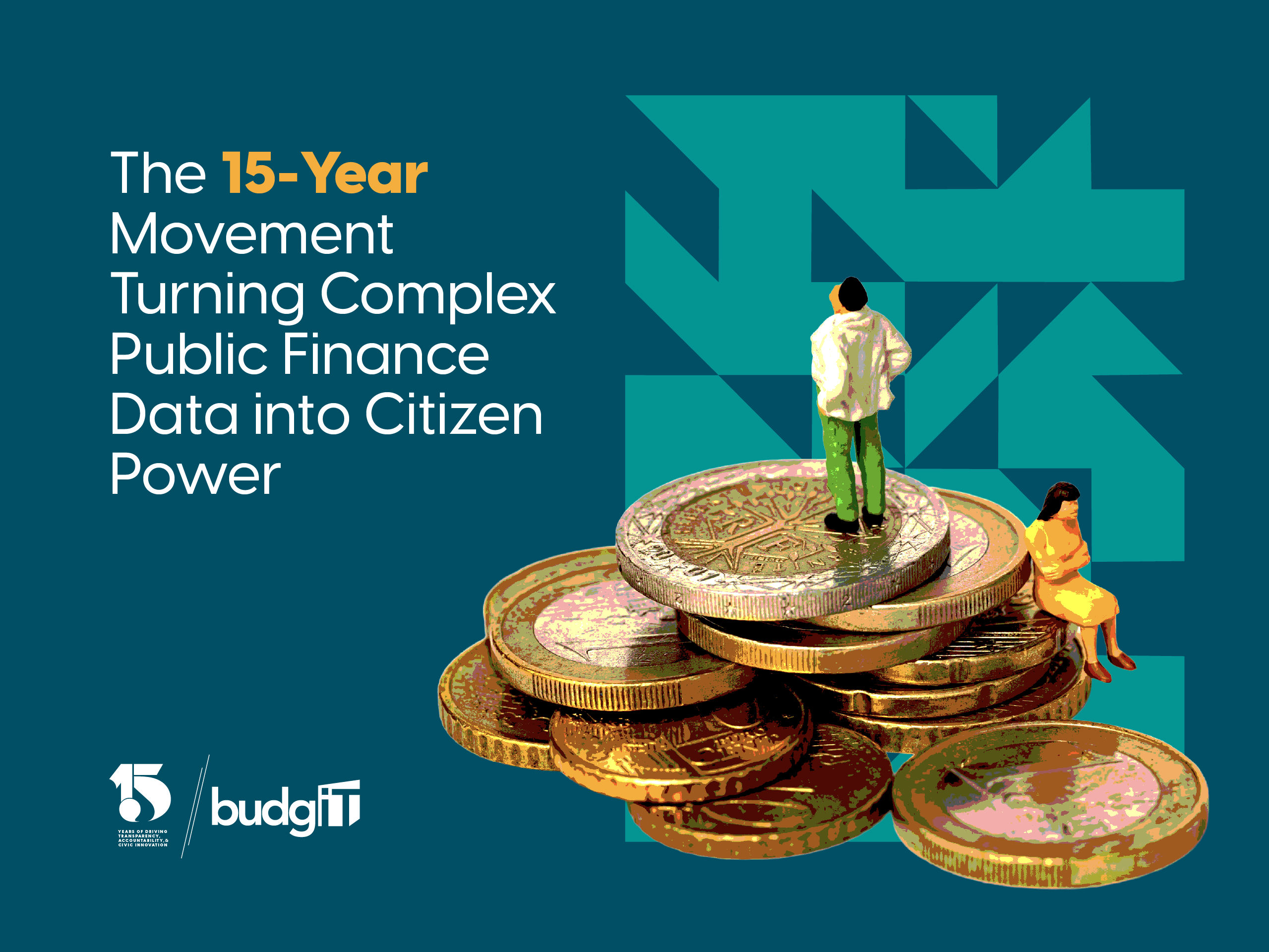
To the untrained eye, a national budget is a monolith of text and endless rows of zeroes. It is dense, intimidating, and devoid of its connection to human life. Quite candidly, it was the economist Joseph Schumpeter who wrote about a century ago that a budget is the very “skeleton of the state stripped of all misleading ideologies.”
Indeed, a budget is more than a document filled with figures. It is a profound moral statement. It represents decisions about the quality and condition of classrooms where children learn, the structural integrity and healthcare services obtainable at hospitals families depend on, the safety of roads communities travel, and generally the public services people expect from their government. Yet, public finance data remains buried in complex spreadsheets, making it difficult for citizens to understand how public money is allocated, spent and accounted for.
For half a generation, BudgIT Foundation has worked to dismantle this systemic barrier. Through research, civic technology, public education, community engagement, and advocacy, we have demystified public finance and strengthened citizens’ ability to participate in governance. Our work connects government budget numbers to people’s everyday experiences and the decisions that shape their communities.
This mission is what gives weight to our 15th anniversary, and celebrating such a milestone begs a fundamental question: what difference is our work making?
The true answer lies beyond our project activities and outputs. It is found in the rural community that leverages our Tracka platforms to demand the completion of an abandoned healthcare clinic. It is found in the urban youth driving critical fiscal conversations across social media and in the town hall meetings where citizens look public officials in the eye to demand accountability.
Fifteen Years of Making Public Money a Public Conversation
BudgIT began with a simple but powerful idea: citizens should be able to understand how public money is planned, allocated, and spent.
Over the years, that idea has grown into a broader civic technology and public finance initiative working across Nigeria, Ghana, Liberia, Senegal, and Sierra Leone, with a United States office supporting its international work.
The organisation has developed research publications, civic technology platforms, and citizen engagement initiatives that help make government spending more visible. Its work has also contributed to conversations about fiscal responsibility, public service delivery, and institutional accountability.
At its 15th-anniversary press conference in August 2026, BudgIT reported that its fiscal transparency initiatives had reached more than 22 million citizens. It also reported that completed projects had benefited more than 11.5 million Nigerians and that it had organised over 7,612 town hall meetings to promote citizen participation in governance. These milestones reflect the scale of the organisation’s work and the importance of sustained civic engagement. However, reach and scale are only part of the story. The deeper question is how people use the information and opportunities provided.
Does a citizen understand the budget better after attending a training? Does a community know which public institution is responsible for a service? Does research help stakeholders ask more informed questions? Does technology make it easier to access information that was previously difficult to find?
These questions connect BudgIT’s activities to its broader mission and make monitoring, evaluation, and learning essential to understanding its impact.
When Budget Information Reaches the People Who Need It
One of the clearest examples of BudgIT’s approach is in Senegal, where the international programme continued its work on budget literacy and citizen engagement. The launch of the 2026 Citizens’ Budget provided an opportunity to engage university students on public finances and government debt. During the activity, the team trained 43 students on the Citizens’ Budget. We also secured commitments from two student associations to collaborate with BudgIT Senegal, extending the conversation beyond the initial event.
In Ghana, we showed the importance of linking civic education to practical opportunities for engagement. A civic education forum educated 34 citizens on their civic rights and responsibilities. The programme also documented two advocacy letters drafted and submitted concerning selected public projects in the Eastern and Bono regions.
BudgIT’s Economic and Intelligence Unit continued its secondary cities research project, examining economic activity, productivity, employment, and the factors influencing growth in selected Nigerian cities. The team completed the wider report and worked on city-level analysis, including research on Aba and Zaria. The research involved data analysis, fieldwork, and engagement with economic actors to develop a clearer picture of local economic conditions.
Why does this matter? National economic statistics can reveal important trends, but they may not fully explain the realities of individual cities. Local economies have different strengths, constraints, and opportunities. Understanding these differences can help policymakers and development partners consider more targeted approaches to infrastructure, employment, and economic development.
The intended impact is not simply to produce another report or launch another digital tool. It is to make useful information more accessible and support better-informed decisions.
Climate change, energy access, and environmental management affect communities in very practical ways. They influence livelihoods, household costs, public health, and the sustainability of local economies. BudgIT’s climate and extractives-related work contributes to these conversations by connecting research with public engagement and accountability.
During the quarter, BudgIT conducted research on energy access and climate financing for low-income households, work relating to gas in Nigeria’s energy transition, and engagement on methane emissions reduction and flood prevention. These efforts create opportunities to examine how government policy, environmental responsibility, and citizens’ needs intersect.
A Fifteenth Anniversary That Brought the Mission Back to the Community
BudgIT’s 15th anniversary was also an opportunity to reflect on past achievements. It also showed why citizen participation remains central to its work. One anniversary activity was a town hall meeting in Shomolu, Lagos, themed “Unlocking LGA Potentials Through Active Citizens’ Participation.”
Residents, community leaders, government representatives, and civil society organisations gathered to discuss local government responsibilities, public services, and ways citizens can participate more actively in governance. They also shared community experiences, including concerns about barriers persons with disabilities face when accessing public services.
The meeting gave residents and stakeholders a direct opportunity to engage; the town hall brought these questions into a shared conversation. It is also about whether residents know which institutions are responsible for their communities, whether they can communicate their needs and whether decision-makers are willing to listen and respond.
BudgIT Staff globally were not left behind in the celebration, as it provided staff across all countries of operation a moment to reconnect, reflect on our journey, and consider the priorities that will shape the next chapter. We have built a foundation that has worked and made an impact over the years; now we must keep building while staying responsive to citizens’ changing needs and the evolving opportunities offered by research and technology.
Looking Ahead: Making the Next Fifteen Years Count
As BudgIT looks to the next fifteen years, its priorities remain closely tied to a fundamental belief: citizens should have the information and opportunities they need to participate meaningfully in governance. Achieving this requires continued investment in research, accessible communication, civic technology, community engagement, and partnerships across sectors and countries. It also requires stronger evidence about the changes these interventions produce.
Most importantly, it means keeping citizens at the centre of the story. Behind every budget explainer is someone trying to understand how public resources are used. Behind every town hall is a community seeking answers. Behind every research report is an opportunity to improve a decision. And behind every civic technology tool is the chance to make information easier to access and use.
Fifteen years on, the journey is far from complete. We still have questions to ask, gaps to close, and institutions to engage. But the work continues to build a stronger foundation for informed citizens, evidence-based public conversations, and accountable governance. The true measure of impact is not simply how many activities we complete or how many people we reach. It is whether our work helps people understand their rights, participate in decisions, and turn public resources into public value.
That is the work BudgIT has pursued for 15 years and the commitment that will continue to guide the next chapter.