
The Shock and Its Scale
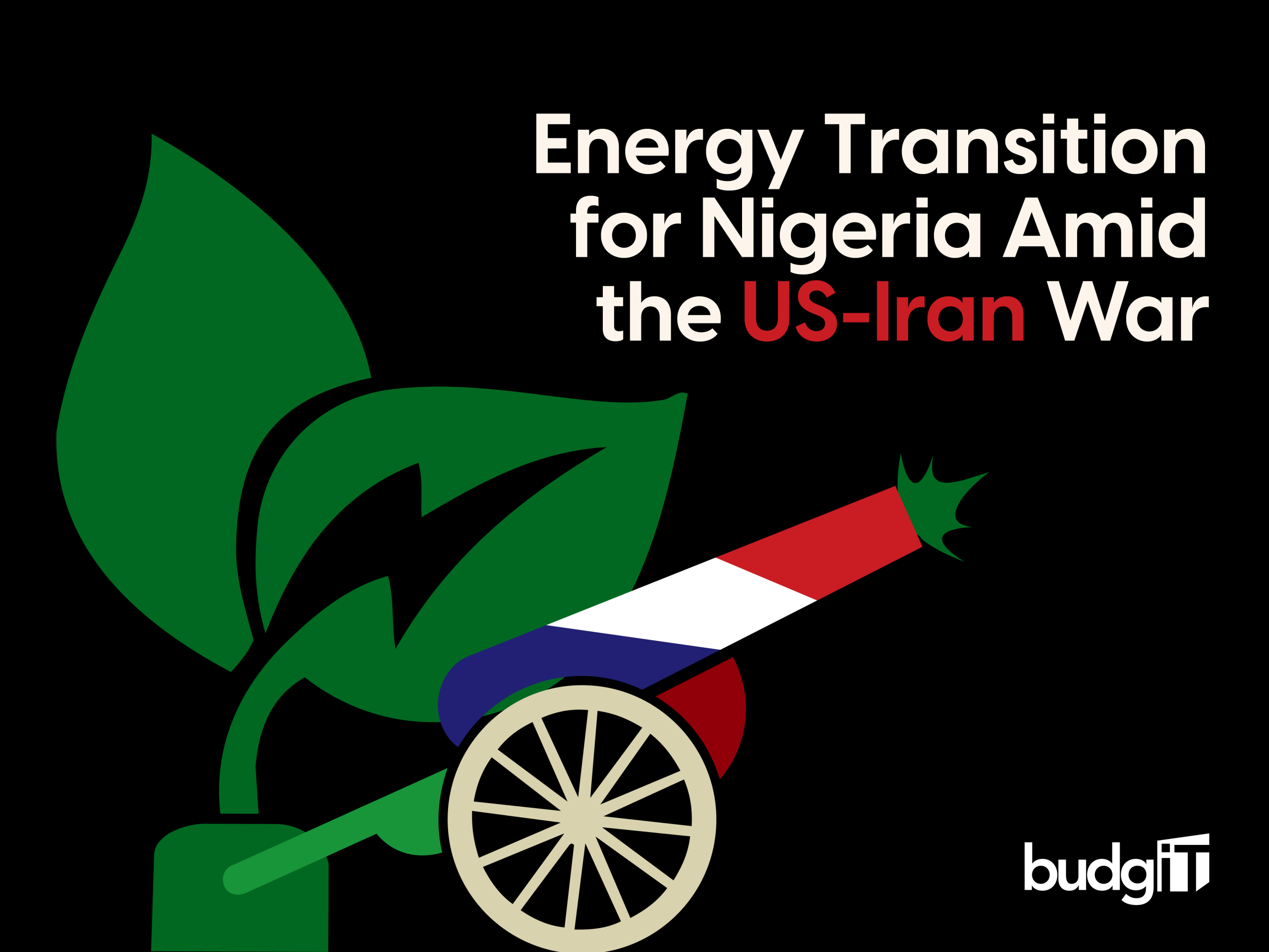
The outbreak of war between the United States and Iran in early 2026 sent tremors through global energy markets. When US and Israeli forces struck Iran in late February 2026, the Strait of Hormuz, the narrow passage through which roughly a fifth of the world’s seaborne oil and gas moves, was effectively shut down. Brent crude, which had been trading below $70 at the start of the year, surged past $120 per barrel within weeks. Fertiliser costs spiked sharply as Gulf supply chains broke down, and food security warnings rippled across the developing world.
For Africa, the consequences are mixed. While oil-exporting countries stand to experience increased revenues, most African nations remain net importers of refined fuel, and Nigeria is no exception. Despite being the continent’s largest oil producer, Nigeria has historically exported crude only to reimport refined products at a premium, a structural absurdity only now beginning to ease as the Dangote refinery which currently accounts for roughly 80% of domestic fuel supply, reshapes the country’s refining landscape. Even so, higher global oil prices do not automatically translate into widespread economic benefits. For the majority of Nigerians, they still result in domestic inflation, fiscal strain, and deepening hardship for ordinary citizens.
A Structural Shift, Not Just a Price Spike
What distinguishes this moment from previous oil shocks is that it is speeding up a shift in global energy investment that was already happening. The International Energy Agency, IEA’s Executive Director has noted that the crisis is pushing nations toward renewable energy not merely for environmental reasons, but because solar, wind, and hydro are domestic energy sources that cannot be blockaded or priced in a foreign currency. This reframing from climate obligation to strategic necessity is already showing up in hard data. In March 2026 alone, China exported 68 gigawatts of solar technology, surpassing its previous monthly record by 50%, with significant growth in African and Asian markets.
Three structural forces are now converging on the African continent specifically. First, the economic case for renewables has been settled: solar and wind are already the cheapest sources of new electricity across most of Africa, and the war has simply made the hidden cost of fossil-fuel dependency through inflation, currency weakness, and import bills much more visible. Secondly, the energy security argument has moved from theory to reality: a solar panel generating electricity on African soil is indifferent to events in the Persian Gulf, and finance ministers watching their currencies slide under the pressure of $120 oil understand this acutely. Thirdly, institutional capital is beginning to respond: major African banks have started capping fossil fuel exposure, and Africa’s pension funds managing roughly $1 trillion in assets are increasingly being identified as the primary vehicle for financing a domestic renewable buildout.
Nigeria’s Particular Position
Nigeria sits at a more complex intersection of these forces than most African states. It is simultaneously the continent’s largest oil and gas producer and a country crippled by chronic electricity shortages, running what amounts to a $14 billion parallel economy of diesel generators because its national grid cannot reliably meet demand. Rising global fuel prices do not benefit ordinary Nigerians; they deepen the cost of a dependency the country has never resolved.
Yet a significant shift in Nigeria’s supply chain position is underway. The Dangote Petroleum Refinery has fundamentally altered Nigeria’s relationship with refined fuel, even if its relationship with its own crude remains more complicated. Dangote sources the majority of its feedstock from international markets, as domestic crude allocation remains constrained by longstanding Joint Venture (JV) lifting arrangements, Production Sharing Contract (PSC) obligations, and crude-backed loan commitments that limit how much Nigerian production actually flows to the refinery. What has changed, however, is the location where value is captured: for the first time, Nigeria is processing meaningful volumes of petroleum domestically, reducing the structural absurdity of exporting crude abroad only to reimport refined products at a premium. At $120 Brent, the commercial case for domestic refining is overwhelming regardless of where the feedstock originates; the margin between crude import cost and refined product value is captured inside the Nigerian economy rather than surrendered to foreign refiners, generating taxes, duties, and foreign exchange savings that would otherwise leak out of the system entirely. This translates directly into government revenue through taxes, duties, and reduced foreign exchange pressure capital that, if directed wisely, could fund the very energy infrastructure Nigeria needs to reduce its long-term fossil fuel exposure.
A more competitive and profitable domestic refining industry strengthens the economic logic of continued oil production, creating a powerful institutional and fiscal incentive to defend fossil fuel revenues rather than transition away from them. Nigeria will need to consciously resist the pull of this incentive not by undermining Dangote’s commercial success, but by treating the fiscal windfall it generates as transition capital rather than a mandate for the status quo.
The policy groundwork, however, is more developed than is often acknowledged. Nigeria is committed to net-zero emissions by 2060 at COP26 and launched a comprehensive Energy Transition Plan in 2022, targeting roughly 6.3 gigawatts of new power capacity by 2030 and 60% renewable generation by 2060. The Electricity Act of 2023 decentralised the power sector and opened space for private investment. The removal of the fuel subsidy, painful as it has been for consumers, has created a genuine price signal that makes distributed solar commercially competitive for households and small businesses without requiring government support. Nigerian manufacturers currently spend 30-40% of their operating costs on energy, creating a strong financial incentive to transition toward solar-hybrid systems.
The Strategy Required
Capitalising on this moment demands more than policy goodwill. Four interconnected actions are essential. The most fundamental is large-scale investment in grid transmission infrastructure. Nigeria’s renewable energy potential is effectively stranded without the physical capacity to move electricity from where it can be generated to where it is needed. No volume of new generation, renewable or otherwise, can compensate for a transmission bottleneck. This is precisely the kind of long-term, unglamorous infrastructure that windfall capital from elevated oil revenues should be directed toward.
Alongside grid investment, Nigeria needs a robust distributed energy framework to serve the roughly 80 million Nigerians currently without reliable electricity. Pay-as-you-go solar financing, mini-grid regulation, and net metering policies will move faster than centralised grid expansion and simultaneously build the demand base that makes larger infrastructure investments commercially viable over time.
Nigeria must also think strategically about its position in the critical minerals supply chain that underpins the global energy transition. The batteries and solar panels driving that transition depend on lithium, cobalt, manganese, and other materials that are disproportionately found on the African continent, including within Nigeria. The urgent question raised at the February 2026 Mining Indaba in Cape Town is whether African nations become raw material exporters to foreign manufacturers, or build the processing and manufacturing capacity to capture more value domestically. Nigeria should be pursuing beneficiation agreements and regional supply chain coordination under the African Continental Free Trade Area.
Finally, Nigeria’s energy security cannot be fully achieved within its own borders. The continent’s renewable resources are geographically uneven: solar concentrated in the Sahel, hydropower in the Congo Basin, geothermal in East Africa. Building the transmission lines, regulatory frameworks, and power pool agreements that connect these resources across borders is the architecture of genuine continental energy sovereignty. As Africa’s largest economy, Nigeria has both the interest and the responsibility to lead that integration through existing frameworks like the ECOWAS power pool, which has been significantly underutilised.
The Real Constraints
Nigeria’s fiscal windfall from high oil prices is driven by global price movements, not by production growth, meaning a ceasefire or diplomatic resolution could normalise prices before Nigerian institutions have redeployed the capital. The Dangote refinery, for all its strategic value, also deepens the institutional weight behind fossil fuels: a world-class domestic refining asset creates powerful stakeholders- investors, employees, government revenue streams with a vested interest in sustaining oil demand. Managing that political economy, ensuring that refining success does not crowd out transition investment, will require deliberate policy design rather than market forces alone. Politically, rising fuel costs create enormous pressure to restore subsidies or introduce new taxes, a response that is understandable but that diverts resources away from the structural investments that would reduce vulnerability to the next shock.
The Larger Stakes
The Iran war could, in retrospect, become the shock that finally breaks Africa’s structural dependence on imported fossil fuels and repositions it as a clean energy producer and technology manufacturer. But that outcome is not automatic. It requires institutional discipline over windfall revenues, willingness to invest in infrastructure that won’t produce votes before the next election, trade negotiators who can convert mineral endowments into manufacturing capacity, and a finance ministry prepared to direct sovereign capital toward domestic energy systems rather than foreign assets.
The window created by this crisis is real, but it is not permanent. Countries and institutions that move decisively now will find capital, technology, and political support available to them. Those that wait for prices to ease and the pressure to pass will find the moment has closed. For Nigeria, this is among the most consequential junctures in a generation, and the choice of how to respond belongs entirely to its own leadership.
REFERENCES
- Brent Chart. (2026). Brent oil price history: 1988 to today. BrentChart.com. https://brentchart.com/brent-price-history
- Rooney, K. (2026, March 25). Fertilizer prices surge as Iran war raises food security and inflation concerns. CNBC. https://www.cnbc.com/2026/03/25/fertilizer-price-iran-war-food-security-inflation-urea-potash-nitrogen-farmers.html
- Ishola, F. (2026, May 14). The 2026 Dangote refinery blueprint: Location, IPO, and global energy impact. Nigeria Housing Market. https://www.nigeriahousingmarket.com/guides/energy-reports/ultimate-guide-dangote-refinery-status-2026
- Harvey, F. (2026, April 24). ‘The damage is done’: Global oil crisis has changed fossil fuel industry for ever, IEA chief says. The Guardian. https://www.theguardian.com/environment/2026/apr/24/global-oil-crisis-changed-fossil-fuel-industry-for-ever-iea-chief-fatih-birol
- Lewis, M. (2026, April 22). China shipped a record 68 GW of solar in March—here’s why it matters. Electrek. https://electrek.co/2026/04/22/china-shipped-a-record-68-gw-of-solar-in-march-heres-why-it-matters/
- The Citizen Reporter. (2025, November 7). Why the issue with Africa’s pension funds is not money. The Citizen.
- International Energy Agency. (n.d.). Nigeria. https://www.iea.org/countries/nigeria
- Nigeria Energy Transition Office. (n.d.). Nigeria net zero. https://www.nigerianetzero.org/
- Afolabi, V. (2025, August 13). Deep dive into Nigeria’s new electricity market reform: Everything one must know. Energy in Africa. https://energyinafrica.com/insights/deep-dive-into-nigerias-new-electricity-market-reform-everything-one-must-know/
- Adesanya, A. A., & Pearce, J. M. (2019). Economic viability of captive off-grid solar photovoltaic and diesel hybrid energy systems for the Nigerian private sector. Renewable and Sustainable Energy Reviews, 114, 109348.
- Abba Aliyu, Managing Director, Rural Electrification Agency (REA), remarks at Huawei Day 2025 Nigeria, as reported by Leadership Newspaper, May 16, 2025. Available at: https://leadership.ng/80m-nigerians-lack-access-to-electricity/
- Natural Resources News. (2026, February 10). Mining Indaba 2026 opens in Cape Town with record attendance, calls for Africa to shift from resources to long-term value.https://naturalresourcesnews.com/2026/02/10/mining-indaba-2026-opens-in-cape-town-with-record-attendance-calls-for-africa-to-shift-from-resources-to-long-term-value/