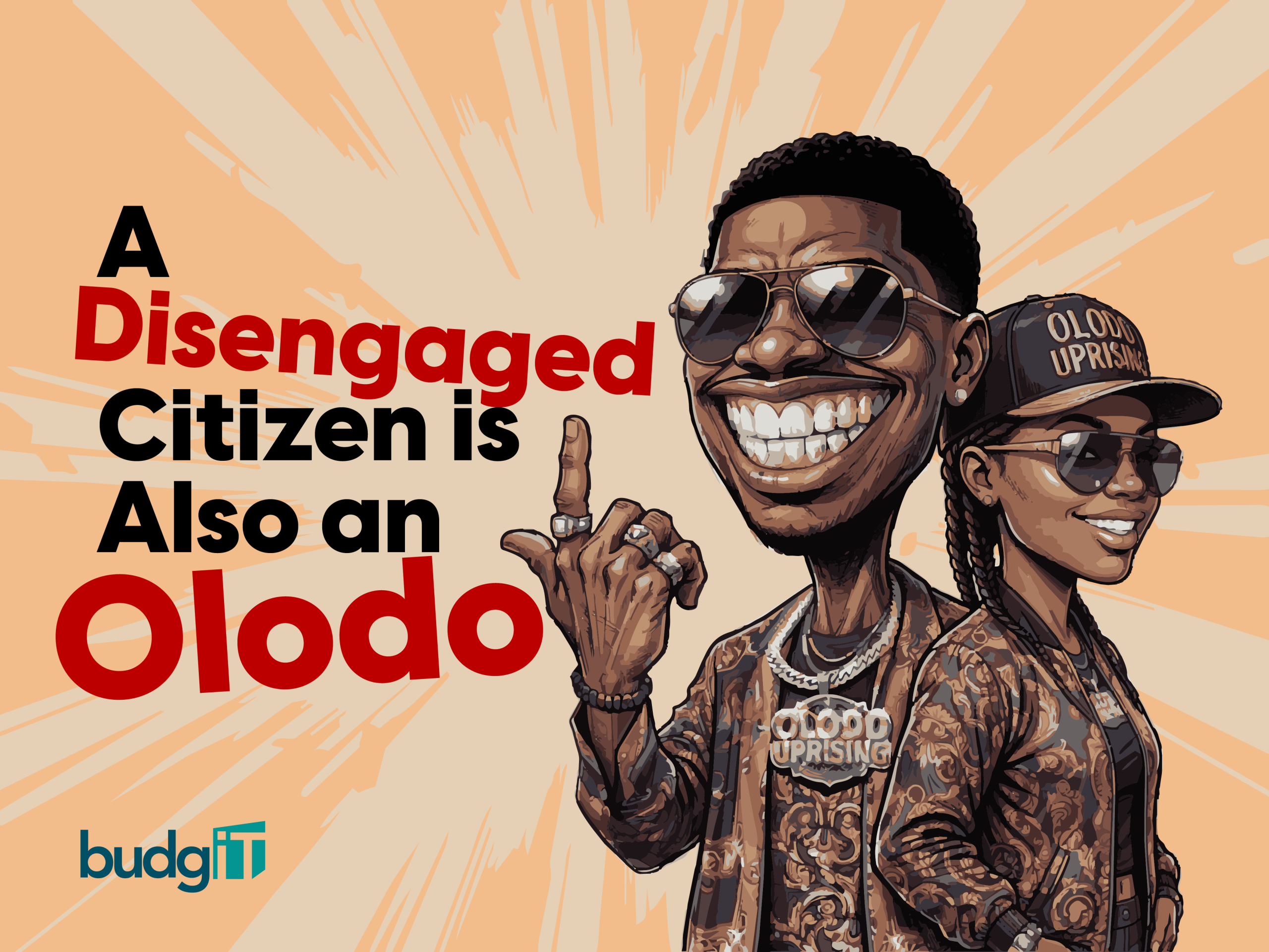

A Disengaged Citizen Is Also an Olodo

Author

Belinda Edo

Everybody has an opinion on Olodo Uprising, an emerging term that went viral on social media recently following remarks made by popular Nigerian singer Oludemilade Martin Alejo, stage name Ycee, on a podcast. Ycee said Nigeria has stopped celebrating intelligence, blaming what he described as “Peller culture” for the shift. The remark prompted a response from the popular TikTok streamer Habeeb Hamzat, commonly known as Peller, who asked how many cars his critics have. Jarvis, born Amadou Elizabeth Aminata, Peller’s fiancée and a content creator known for her AI robot persona online, also joined the conversation, arguing that many graduates have no jobs to show for their certificates. Carter Efe, a comedian, streamer and friend of Peller, later added to the debate by displaying a degree certificate that did not survive twenty-four hours of scrutiny. 

Almost every Nigerian knows what it means to be called an olodo¹. It is one of those words that immediately question someone’s intelligence, their ability to understand things and their place in a conversation. For weeks now, that familiar insult has grown into a much bigger debate about intelligence, education, success and the values the Nigerian society celebrates.

Everybody is arguing about what the culture rewards. Almost nobody is asking what this conversation looks like when we turn the same lens towards the interest of Nigerians in governance.

Because here’s the thing. The same country arguing for weeks about whether ignorance has become a badge of honour online often struggles to tell you what its own Budget Office does. Ask the average Nigerian to name three federal agencies. Ask them what their state received from the Federation Allocation Accounts Committee (FAAC) last month. Ask them what percentage of the national budget went to education or healthcare this year.

The silence will be louder than anything said on The Afropolitan Podcast.

And that silence says more than we would like to admit.

We have become very good at following moments. We know every twist in an online controversy, every response, every livestream and every comeback. What’s happening in the lives of our favourite celebrities. We can spend hours debating who said what, who was right and who won the argument.

Yet many of us struggle to follow the decisions that shape our everyday lives.

Budgets rarely trend. Procurement documents rarely become viral conversations. Quarterly reports rarely receive the same attention as social media debates or viral TikToks. But inside those documents are decisions that determine whether schools receive funding, whether hospitals have what they need, whether roads are completed and whether communities get the services they have been promised.

Governance is made up of details. It lives in allocations, implementation reports, contracts and timelines. It requires citizens who are willing to look beyond announcements and follow what happens after the headlines disappear.

What gets ignored creates room for things to continue unchecked.

Nigeria has repeatedly documented cases of agencies receiving public funds without clear evidence of the impact those resources create². Some have remained in government records despite questions about their relevance³. These issues have appeared in reports and public conversations, yet they continue to return because public attention moves quickly.

And attention shapes accountability.

When citizens understand how public money moves, they are better positioned to ask questions. When communities know what has been promised, they can recognise when those promises are not delivered. When elected officials know people are watching, explanations become necessary. 

Disengagement does not only mean missing information. It means losing leverage.

It means a Senator can vote on issues that affect millions of people and face little public scrutiny because many citizens never know what happened. It means projects can be announced, funded and abandoned while the people meant to benefit from them remain unaware of what was promised.

This is where the conversation around olodo becomes uncomfortable.

The young Nigerians being called olodo today are part of a generation that has grown up in an economy where attention is constantly being competed for. Social media understands how to keep people watching. Entertainment knows how to create stories people want to follow. Every new development comes with another reaction, another opinion and another reason to stay engaged.

Governance has stories too.

A budget document is a story about priorities. A procurement record is a story about decisions. An abandoned project is a story about promises that never reached the people they were meant for.

For many Nigerians, government information still feels distant. It feels like something meant for experts, analysts and people who work around policy. Yet public decisions are deeply personal. They show up in the quality of schools children attend, the healthcare people receive, the roads they travel and the opportunities available in their communities. And whether we admit it or not, these decisions shape all of our lives, but then again, the same thing that shapes our lives is the very thing we pay the least attention to.

Civic knowledge should go beyond understanding how the government works. It should help people understand how government decisions affect their everyday lives and give them the confidence to ask better questions.

For weeks, Nigerians have shown that we know how to pay attention when something captures our interest. We have followed every podcast clip, every response and every new development in the “olodo” conversation. We have debated intelligence, success and education with incredible energy.

That same energy can transform how we engage with governance.

Imagine more citizens checking what their states receive from FAAC, tracking projects in their communities, understanding budget promises and asking questions when reality does not match what was announced.

Imagine public officials knowing that citizens are paying attention beyond election seasons and putting every decision, every allocation and every kobo under scrutiny.

The Olodo Uprising will eventually become another moment in Nigeria’s internet history. The conversation will move on, as internet conversations always do. What should remain is the question it leaves behind.

What happens when a society that is passionate about debating intelligence becomes equally passionate about understanding power?

Citizenship grows when people stay curious, pay attention and ask questions about the decisions that shape their everyday lives.

Perhaps the uncomfortable truth is that being an olodo is not only about what someone knows. It can also be about choosing not to seek understanding when it matters.

A disengaged citizen gives away one of democracy’s greatest tools, the ability to question, demand answers and hold power accountable.

And when citizens stop paying attention, everyone pays the price.
Share This Post

Post Author: Belinda Edo

Everybody has an opinion on Olodo Uprising, an emerging term that went viral on social media recently following remarks made by popular Nigerian singer Oludemilade Martin Alejo, stage name Ycee, on a podcast. Ycee said Nigeria has stopped celebrating intelligence, blaming what he described as “Peller culture” for the shift. The remark prompted a response from the popular TikTok streamer Habeeb Hamzat, commonly known as Peller, who asked how many cars his critics have. Jarvis, born Amadou Elizabeth Aminata, Peller’s fiancée and a content creator known for her AI robot persona online, also joined the conversation, arguing that many graduates have no jobs to show for their certificates. Carter Efe, a comedian, streamer and friend of Peller, later added to the debate by displaying a degree certificate that did not survive twenty-four hours of scrutiny. 

Almost every Nigerian knows what it means to be called an olodo¹. It is one of those words that immediately question someone’s intelligence, their ability to understand things and their place in a conversation. For weeks now, that familiar insult has grown into a much bigger debate about intelligence, education, success and the values the Nigerian society celebrates.

Everybody is arguing about what the culture rewards. Almost nobody is asking what this conversation looks like when we turn the same lens towards the interest of Nigerians in governance.

Because here’s the thing. The same country arguing for weeks about whether ignorance has become a badge of honour online often struggles to tell you what its own Budget Office does. Ask the average Nigerian to name three federal agencies. Ask them what their state received from the Federation Allocation Accounts Committee (FAAC) last month. Ask them what percentage of the national budget went to education or healthcare this year.

The silence will be louder than anything said on The Afropolitan Podcast.

And that silence says more than we would like to admit.

We have become very good at following moments. We know every twist in an online controversy, every response, every livestream and every comeback. What’s happening in the lives of our favourite celebrities. We can spend hours debating who said what, who was right and who won the argument.

Yet many of us struggle to follow the decisions that shape our everyday lives.

Budgets rarely trend. Procurement documents rarely become viral conversations. Quarterly reports rarely receive the same attention as social media debates or viral TikToks. But inside those documents are decisions that determine whether schools receive funding, whether hospitals have what they need, whether roads are completed and whether communities get the services they have been promised.

Governance is made up of details. It lives in allocations, implementation reports, contracts and timelines. It requires citizens who are willing to look beyond announcements and follow what happens after the headlines disappear.

What gets ignored creates room for things to continue unchecked.

Nigeria has repeatedly documented cases of agencies receiving public funds without clear evidence of the impact those resources create². Some have remained in government records despite questions about their relevance³. These issues have appeared in reports and public conversations, yet they continue to return because public attention moves quickly.

And attention shapes accountability.

When citizens understand how public money moves, they are better positioned to ask questions. When communities know what has been promised, they can recognise when those promises are not delivered. When elected officials know people are watching, explanations become necessary. 

Disengagement does not only mean missing information. It means losing leverage.

It means a Senator can vote on issues that affect millions of people and face little public scrutiny because many citizens never know what happened. It means projects can be announced, funded and abandoned while the people meant to benefit from them remain unaware of what was promised.

This is where the conversation around olodo becomes uncomfortable.

The young Nigerians being called olodo today are part of a generation that has grown up in an economy where attention is constantly being competed for. Social media understands how to keep people watching. Entertainment knows how to create stories people want to follow. Every new development comes with another reaction, another opinion and another reason to stay engaged.

Governance has stories too.

A budget document is a story about priorities. A procurement record is a story about decisions. An abandoned project is a story about promises that never reached the people they were meant for.

For many Nigerians, government information still feels distant. It feels like something meant for experts, analysts and people who work around policy. Yet public decisions are deeply personal. They show up in the quality of schools children attend, the healthcare people receive, the roads they travel and the opportunities available in their communities. And whether we admit it or not, these decisions shape all of our lives, but then again, the same thing that shapes our lives is the very thing we pay the least attention to.

Civic knowledge should go beyond understanding how the government works. It should help people understand how government decisions affect their everyday lives and give them the confidence to ask better questions.

For weeks, Nigerians have shown that we know how to pay attention when something captures our interest. We have followed every podcast clip, every response and every new development in the “olodo” conversation. We have debated intelligence, success and education with incredible energy.

That same energy can transform how we engage with governance.

Imagine more citizens checking what their states receive from FAAC, tracking projects in their communities, understanding budget promises and asking questions when reality does not match what was announced.

Imagine public officials knowing that citizens are paying attention beyond election seasons and putting every decision, every allocation and every kobo under scrutiny.

The Olodo Uprising will eventually become another moment in Nigeria’s internet history. The conversation will move on, as internet conversations always do. What should remain is the question it leaves behind.

What happens when a society that is passionate about debating intelligence becomes equally passionate about understanding power?

Citizenship grows when people stay curious, pay attention and ask questions about the decisions that shape their everyday lives.

Perhaps the uncomfortable truth is that being an olodo is not only about what someone knows. It can also be about choosing not to seek understanding when it matters.

A disengaged citizen gives away one of democracy’s greatest tools, the ability to question, demand answers and hold power accountable.

And when citizens stop paying attention, everyone pays the price.
Share This Post

Read More