
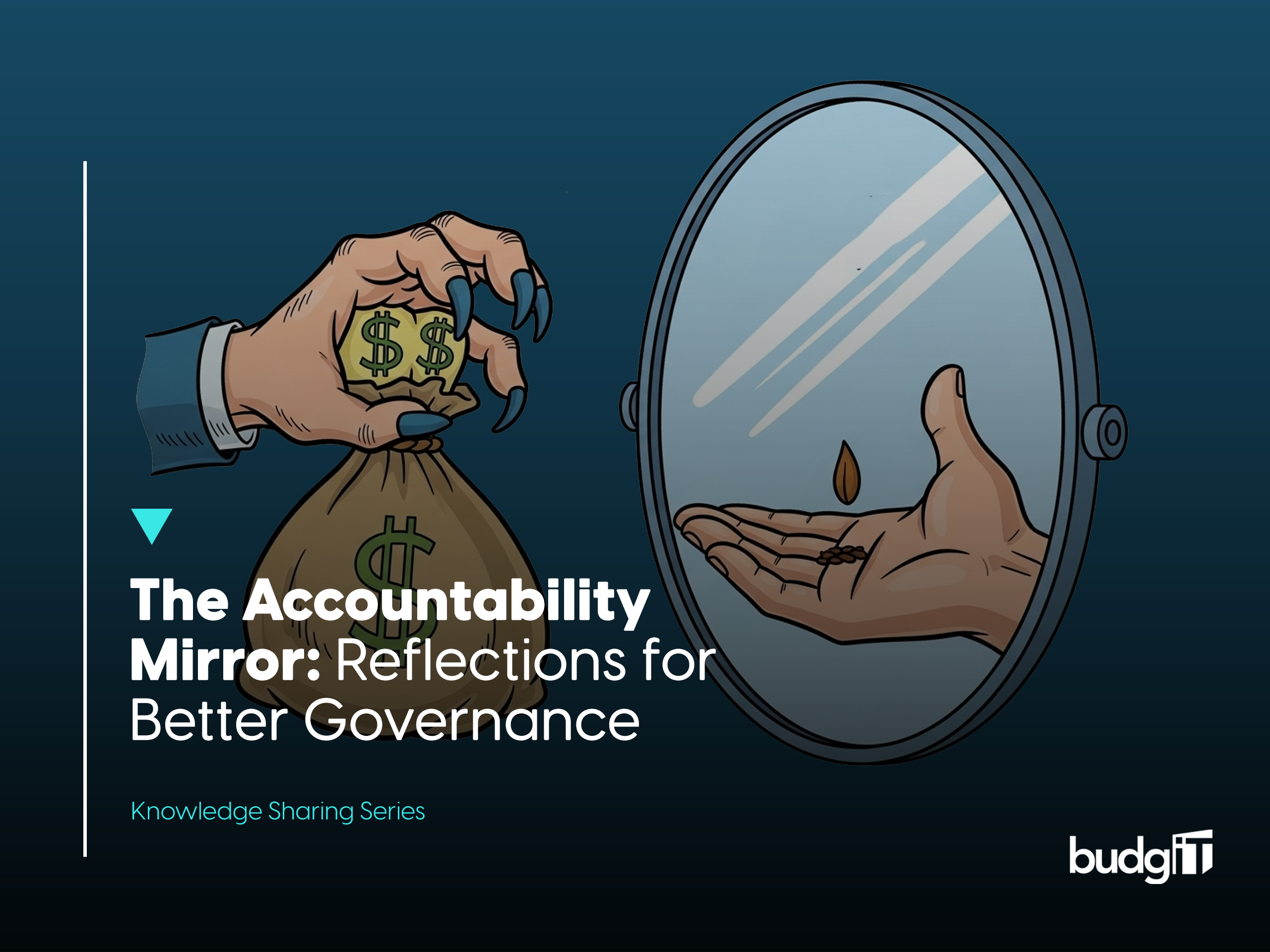

“Accountability is a mirror.”
That simple phrase has stayed with me. It keeps coming back, forcing me to delve deeper into the true meaning of accountability—not just as a word we use in conversations about governance, but as something we live by every day.
We hear “accountability” everywhere: in discussions about government performance, leadership, workplaces, and even personal goals. It’s a term that rolls off the tongue easily, but putting it into practice is far harder. At its core, accountability means being answerable for your actions, taking responsibility when things go wrong, and being willing to explain your decisions clearly and honestly.
But beyond definitions, what does real accountability look like?
It is the quiet moment of self-check: recognising when you’ve wandered off course and correcting it yourself, without waiting for someone else to call you out. It’s having the honesty to say, “I was wrong,” and the humility to make it right.
In governance terms, it shows up in results that matter: a school project completed because the funds allocated and disbursed for it were used properly; a local health centre finally stocked with basic equipment because someone in power or public office did the right thing; that same road listed in the budget year after year actually getting repaired, not because of protests, but because a promise was treated as a promise.
These are not grand gestures; they are the basic building blocks of trust in any system.
- Why Accountability Matters in Leadership
Leadership is not about titles or power. It’s about people. Every choice a leader makes, policy, budget decision, delay or excuse, ripples out and touches real lives. Families depend on functioning schools. Patients need reliable healthcare. Citizens deserve roads that don’t fall apart. However, when accountability is missing or treated as optional, the damage spreads quickly. Systems break down. Workers remain unpaid. Projects are abandoned. Over time, people lose faith in the very institutions meant to serve them, and as hope fades, the belief that things can get better fades too.
Nigeria has everything it needs to thrive: rich in resources, a youthful workforce with digital savvy and limitless creativity. Yet, we often find ourselves stuck in the same cycle of unfulfilled promises and stalled progress. Why? Accountability is still seen by many in leadership as a trendy buzzword, rather than the foundation on which everything else rests.
Imagine a different approach, one where leaders treat accountability not as a checkbox, but as a daily mindset. Where those in public office start each day asking, “Have I done right by the people who depend on me?” That kind of thinking changes outcomes.
- Accountability as Reflection, Not Punishment
Accountability should not be about fear or punishment, but about reflection. It’s pausing to check whether your actions match your words. It’s choosing integrity even when no one is watching.
At its most basic level, accountability is respect, respect for the citizens who placed their trust in you, respect for the resources you’ve been entrusted with, and respect for the responsibility you carry.
So perhaps we shouldn’t keep asking, “Why do leaders need to be accountable?”
The better question is: “How can anyone truly lead without it?”
A leader who refuses to look in the mirror of accountability can’t fully see the people they’re meant to serve. They lead in the dark.
But when leaders choose to look, really look, and act on what they see, transformation becomes possible. Projects get commissioned. When Leaders put the people they serve first, trust between elected representatives and their constituents grows. Most importantly, people feel heard.
That kind of Nigeria isn’t a distant dream. It starts with one honest reflection at a time.
Accountability is a mirror, but will we have the courage to look into it and act on what we see?