
Three years ago, I would never have believed that I would become this involved in governance and citizen engagement.
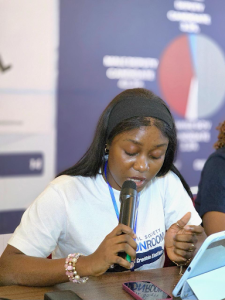
I was a girl from Lagos who just wanted to get out of the Nigerian rat race. I used to be one of the most politically desensitised people you could meet. Somewhere between learning Civic Education in secondary school and growing up in Nigeria where the same problems seemed to return every election cycle, I had simply given up. I stopped expecting much from Nigeria.
So, to think that I am now a development communications professional, working at the intersection of governance, citizen engagement and public accountability—and that I recently found myself in Osun State monitoring a governorship election—feels like a journey worth pausing to acknowledge.
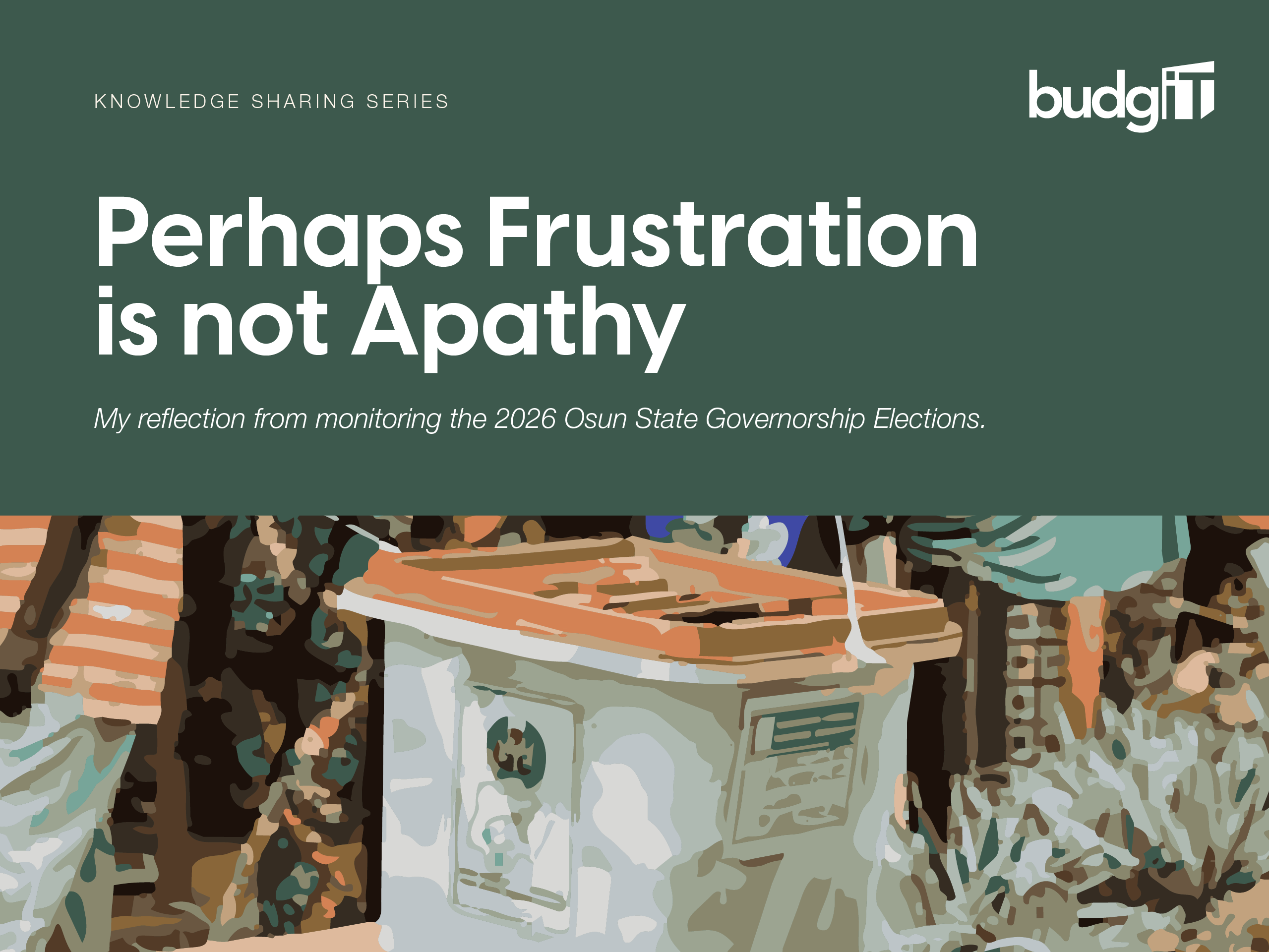
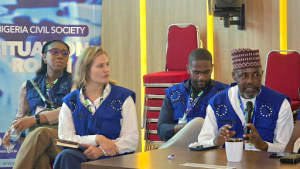
It has been a month since my colleagues at BudgIT and I travelled to Osun State to observe the 2026 governorship elections.
I went there as an election observer. I came back with something else. Hope. Not the loud, optimistic kind. Not the kind that pretends everything is fine. The stubborn kind. The kind that survives despite everything.
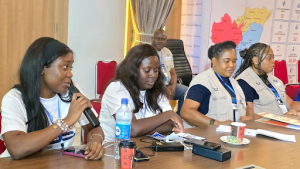 electoral challenges. We have citizens who are discouraged from participating and systems that can make participation feel pointless.
But monitoring the elections in Osun reminded me of something I had almost forgotten; Democracy is still our best shot at making it out, not because it is perfect, but because, despite everything, people still care. And that ‘power to the people’ is not just cliche. The people of Osun showed me just how much.
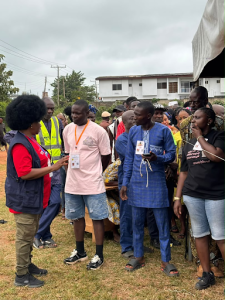
The election was pretty much what you’d expect from an election of this level. The intensity in the air, the violence as expected in tensed areas across Osun west. My team visited a total of 12 polling units across Osogbo and Ilesha. The general experience of voter turnout was average, not groundbreaking or as impressive, but fair.
So yes, they are not necessarily the standard of where we should be as a country. But they showed passion. A kind of passion that cannot be bought, even in an environment where vote-buying has become almost second nature during elections.
At one of the polling units where we observed the counting of votes, the voters were paying close attention. They wanted every process to be done properly. They demanded that all unused ballot papers be cancelled. They insisted that the votes be counted carefully. They watched. They asked questions. They stayed.
Nobody had to convince them that what was happening mattered. They already knew.
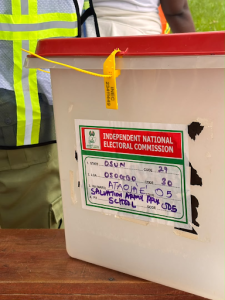
And then something happened that I found particularly fascinating. As the results were being counted, the party agents watched closely. One of the agents representing Party A was visibly happy as Party B’s votes were announced. I remember thinking: This is interesting. Maybe despite allegiances, they were more invested in getting the process right. Maybe that is what democracy looks like at its most basic level: everyone insisting that the process should be fair.
We often talk about Nigerians as apathetic. We say young people don’t care about politics. We say citizens have lost faith in the system. Perhaps sometimes we mistake frustration for apathy.
Perhaps people are not indifferent. Perhaps they are simply tired. But did we give them something to believe in? Something they believe is worth protecting? Let them see a process they feel belongs to them. And you may discover that the fire is still there.
This is why I keep thinking about ants. Ants are tiny, easy to overlook, easy to trample on. Individually, they seem almost insignificant. But watch them closely, and you realise that there is an incredible amount of organisation, persistence and collective action happening beneath the surface.
What we need is to learn collective action. Learn to keep moving and never back down, even when the task (achieving transparency in public finance and leadership) seems bigger than us. Because against all odds, Nigerians still have faith in Nigeria.
I saw it in Osun. I saw it in people who stayed to watch votes being counted. I saw it in citizens who insisted that unused ballot papers be cancelled. I saw it in people who cared enough to demand that the process be done correctly. And most importantly, I saw it in people who had every reason to give up, but showed up anyway.
Three years ago, I had also given up on Nigeria, without even trying. Today, I spend my time thinking about how citizens can better understand governance, participate in public processes and demand accountability from the people who represent them.
I don’t think my journey is unique. Maybe this is what happens when you get close enough to the people. You begin to see that beneath the frustration, there is still belief. Beneath the disappointment, there is still expectation. And beneath all the reasons we have to lose faith, there is still a stubborn hope that Nigeria can become what we know it can be.
I don’t know exactly when Nigeria will get there. But after Osun, I am a little more convinced that we will. Because the people are still here. They are still watching. They are still asking questions. And maybe, eventually, that stubborn faith will save us.
My colleague, Arafat published an article from the POV of the elections itself. Read about the full monitoring process itself here: https://arafatoseni.substack.com/p/watching-elections-up-close?utm_campaign=post&utm_medium=web