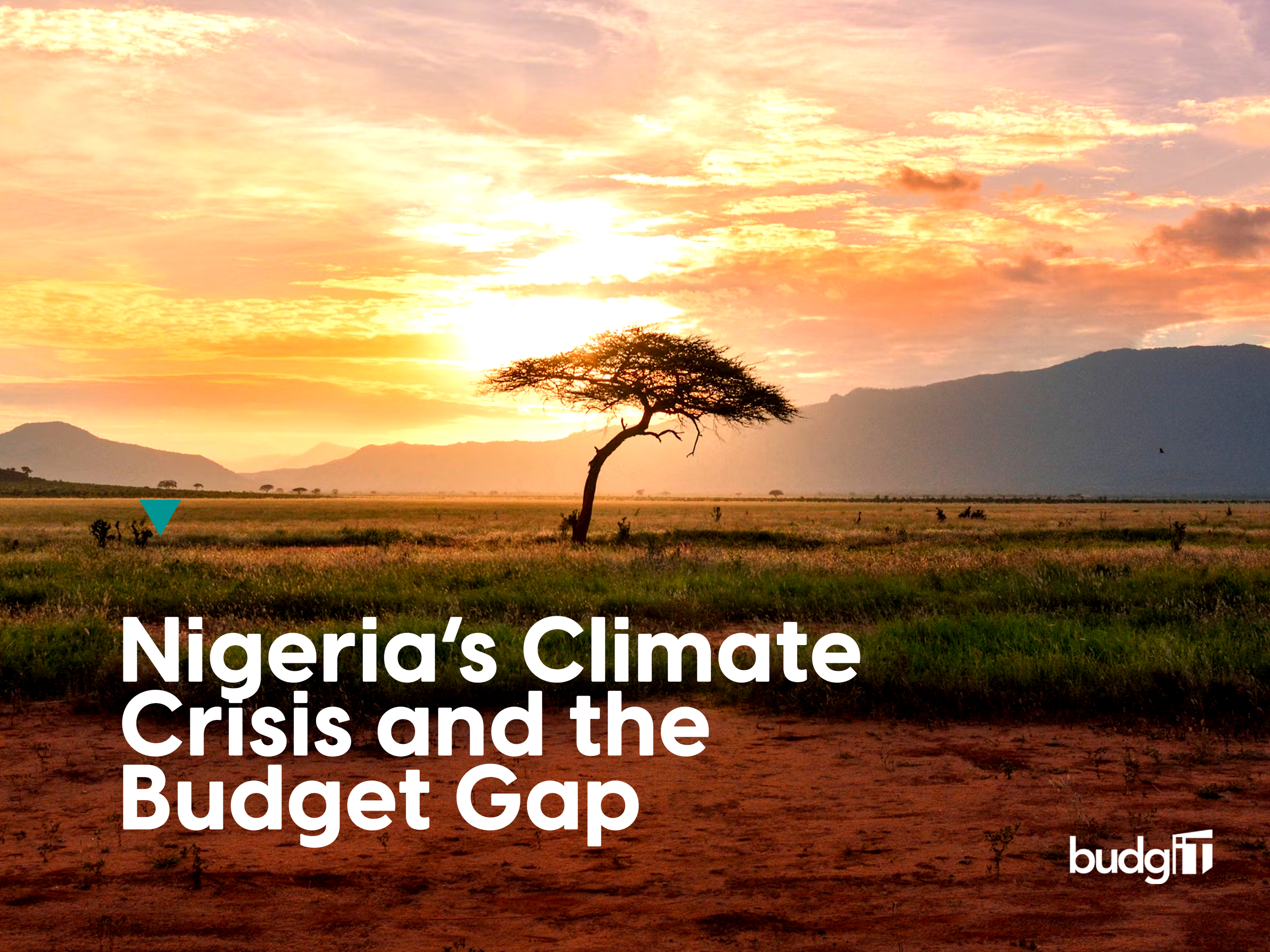

Nigeria’s Climate Crisis and the Budget Gap

Author

Belinda Edo

Nigeria faces a climate challenge that is often overlooked. Lake Chad, once stretching across Yobe State and covering an area as large as some Nigerian states, has dramatically shrunk. The Sahara advances further south each year, forcing herders to abandon arable land. Floods, droughts, and desertification threaten livelihoods, yet the national budget offers little clarity on how funds are spent to address these crises. The issue is not the absence of resources, but the lack of visibility and accountability.

On 25 February 2026, we gathered at the Shehu Musa Yar’Adua Centre in Abuja for a one-day workshop that brought together a vibrant mix of civil society organisations, researchers, journalists, budget analysts, disability rights advocates, academics, government partners, and other key stakeholders from across Nigeria. The goal was clear: to dive into how climate finance flows, uncover gaps in tracking and accountability, and chart practical ways to ensure every naira spent counts for the people.

The Numbers Tell a Story

Between 2021 & 2022, Nigeria received approximately $2.5 billion in climate finance. While substantial, this falls far short of the $17.7 billion needed annually to meet the country’s climate targets. The workshop revealed that the challenge is not only underfunding, but also the difficulty of tracing existing funds.

BudgIT’s Head of Natural Resource and Climate Governance, Enebi Opaluwa, highlighted that climate-related projects are buried under generic line items. Outside environment-related projects like flood control, other climate-related projects like  Solar streetlights, mini-grids, and road construction are all grouped under “infrastructure.” Without a functional classification dedicated to climate action in the budgets, tracking spending, monitoring, and accountability becomes very difficult.

Why the Budget Matters

A national budget is more than numbers; it signals priorities, allocates resources, and provides a paper trail for accountability. BudgIT’s Deputy Country Director, Vahyala Kwaga, guided participants through the public financial management cycle, highlighting how civil society can engage:

  • Budget Call Circular: Issued by the Ministry of Finance, this sets directions for ministries and agencies. Embedding climate risk assessments and mandatory reporting at this stage ensures climate priorities are considered from the outset.
  • Medium-Term Expenditure Framework (MTEF): Nigeria’s three-year plan must reflect climate commitments. The 2026–2028 MTEF references climate goals, providing a benchmark for civil society to track progress.
  • Budget Implementation Reports: Published quarterly, these reports show whether climate allocations are spent as intended. Execution rates below 40% should prompt follow-ups.
  • Audited Financial Statements: The final verified accounts, including ecological fund disbursements and green bond proceeds, provide an additional layer of scrutiny.

The Ecological Fund

Part of Nigeria’s consolidated fund, the ecological fund receives roughly 1% of special allocations, amounting to millions under the 2026 budget. While it has potential for environmental restoration, allocation and utilisation require careful oversight.

In some states, particularly in the Niger Delta and hydroelectric-producing areas, half of the ecological fund is directed to commissions such as the Niger Delta Development Commission, with the remainder retained by the state. Participants emphasised the need for transparent reporting, independent verification, and mandatory project-level disclosure.

Voices from the Room

The workshop was alive with discussion. Participants examined how climate finance flows, where gaps exist, and how transparency and accountability can be strengthened. Insights emerged on ensuring that resources reach intended communities, addressing inclusion, and exploring ways to mobilise both public and private funding effectively.

Key Insights:

  • Community Inclusion: People most affected by floods, desertification, and other climate impacts are often absent from decisions. Participatory monitoring ensures finance meets real needs.
  • Disability Inclusion: Persons with disabilities are largely absent from climate frameworks. A national inclusive climate action guide could address this gap.
  • Capital and Innovation: Nigeria can mobilise private capital for adaptation projects, linking them to revenue-generating activities.
  • NDC Targets: Nigeria’s Nationally Determined Contribution aims for a 32% reduction in emissions, with nearly half dependent on international finance. Mobilising domestic resources is crucial for credibility.

Governance and Oversight

Technical tools like budget tagging matter, but understanding decision-making is equally important. Who approves spending warrants? How are priorities set across ministries? Civil society advocacy must reach these points of governance to strengthen accountability.

State legislatures are meant to oversee spending, but independence varies. Effective climate governance requires both technical tracking and active oversight.

Furthermore, federal and subnational governments should ensure that climate action is systematically embedded in budget call circulars, MTEFs, MTSSs, and annual budgets, with clear links to national development plans, climate policies, and climate commitments. Enforcing standards that enhance budget formulation, revenue mobilisation, cash planning, procurement, debt management and financial reporting can help meet fiduciary standards and reduce barriers to accessing climate finance. Equally important is the development of bankable climate project pipelines aligned with priority sectors, including renewable energy and power, agricultural productivity, urban green infrastructure, and ecosystem regeneration. 

The “Guide to Accessing Climate Finance”, developed by the Partnership for Agile Governance and Climate Engagement, is an example of a tool that can help governments improve PFM systems and access financing for climate action.

Agreed Priorities and Next Steps

  • Civil society organisations identified practical steps to strengthen climate finance accountability:
  • Track climate spending collaboratively across sectors to identify gaps and inconsistencies.
  • Produce data-driven policy briefs that simplify complex budget information and support advocacy.
  • Leverage the Freedom of Information Act to access detailed data on climate-related expenditures.
  • Engage affected communities in participatory monitoring and amplify local voices.
  • Promote inclusion, particularly of persons with disabilities, in climate advocacy efforts.
  • Build technical capacity in climate finance tracking, budget analysis, and data storytelling.
  • Sustain collaboration through joint advocacy and continuous knowledge sharing.

Participants pledged to track climate allocations collaboratively, produce data-driven policy briefs, engage communities, and advocate for reforms that align fiscal responsibility with environmental sustainability. This will not only contribute to improving public finance management but also help position national and state governments to access much-needed climate finance.

Closing Reflections

Budgets are more than numbers; they are democratic tools. They show citizens where priorities lie, track how public resources are used, and ensure communities and the environment are protected.

The climate crisis does not wait for budget cycles. With coordinated, evidence-led civil society action, there is an opportunity to close the gap between policy, finance, and impact.
Share This Post

Post Author: Belinda Edo

Nigeria faces a climate challenge that is often overlooked. Lake Chad, once stretching across Yobe State and covering an area as large as some Nigerian states, has dramatically shrunk. The Sahara advances further south each year, forcing herders to abandon arable land. Floods, droughts, and desertification threaten livelihoods, yet the national budget offers little clarity on how funds are spent to address these crises. The issue is not the absence of resources, but the lack of visibility and accountability.

On 25 February 2026, we gathered at the Shehu Musa Yar’Adua Centre in Abuja for a one-day workshop that brought together a vibrant mix of civil society organisations, researchers, journalists, budget analysts, disability rights advocates, academics, government partners, and other key stakeholders from across Nigeria. The goal was clear: to dive into how climate finance flows, uncover gaps in tracking and accountability, and chart practical ways to ensure every naira spent counts for the people.

The Numbers Tell a Story

Between 2021 & 2022, Nigeria received approximately $2.5 billion in climate finance. While substantial, this falls far short of the $17.7 billion needed annually to meet the country’s climate targets. The workshop revealed that the challenge is not only underfunding, but also the difficulty of tracing existing funds.

BudgIT’s Head of Natural Resource and Climate Governance, Enebi Opaluwa, highlighted that climate-related projects are buried under generic line items. Outside environment-related projects like flood control, other climate-related projects like  Solar streetlights, mini-grids, and road construction are all grouped under “infrastructure.” Without a functional classification dedicated to climate action in the budgets, tracking spending, monitoring, and accountability becomes very difficult.

Why the Budget Matters

A national budget is more than numbers; it signals priorities, allocates resources, and provides a paper trail for accountability. BudgIT’s Deputy Country Director, Vahyala Kwaga, guided participants through the public financial management cycle, highlighting how civil society can engage:

  • Budget Call Circular: Issued by the Ministry of Finance, this sets directions for ministries and agencies. Embedding climate risk assessments and mandatory reporting at this stage ensures climate priorities are considered from the outset.
  • Medium-Term Expenditure Framework (MTEF): Nigeria’s three-year plan must reflect climate commitments. The 2026–2028 MTEF references climate goals, providing a benchmark for civil society to track progress.
  • Budget Implementation Reports: Published quarterly, these reports show whether climate allocations are spent as intended. Execution rates below 40% should prompt follow-ups.
  • Audited Financial Statements: The final verified accounts, including ecological fund disbursements and green bond proceeds, provide an additional layer of scrutiny.

The Ecological Fund

Part of Nigeria’s consolidated fund, the ecological fund receives roughly 1% of special allocations, amounting to millions under the 2026 budget. While it has potential for environmental restoration, allocation and utilisation require careful oversight.

In some states, particularly in the Niger Delta and hydroelectric-producing areas, half of the ecological fund is directed to commissions such as the Niger Delta Development Commission, with the remainder retained by the state. Participants emphasised the need for transparent reporting, independent verification, and mandatory project-level disclosure.

Voices from the Room

The workshop was alive with discussion. Participants examined how climate finance flows, where gaps exist, and how transparency and accountability can be strengthened. Insights emerged on ensuring that resources reach intended communities, addressing inclusion, and exploring ways to mobilise both public and private funding effectively.

Key Insights:

  • Community Inclusion: People most affected by floods, desertification, and other climate impacts are often absent from decisions. Participatory monitoring ensures finance meets real needs.
  • Disability Inclusion: Persons with disabilities are largely absent from climate frameworks. A national inclusive climate action guide could address this gap.
  • Capital and Innovation: Nigeria can mobilise private capital for adaptation projects, linking them to revenue-generating activities.
  • NDC Targets: Nigeria’s Nationally Determined Contribution aims for a 32% reduction in emissions, with nearly half dependent on international finance. Mobilising domestic resources is crucial for credibility.

Governance and Oversight

Technical tools like budget tagging matter, but understanding decision-making is equally important. Who approves spending warrants? How are priorities set across ministries? Civil society advocacy must reach these points of governance to strengthen accountability.

State legislatures are meant to oversee spending, but independence varies. Effective climate governance requires both technical tracking and active oversight.

Furthermore, federal and subnational governments should ensure that climate action is systematically embedded in budget call circulars, MTEFs, MTSSs, and annual budgets, with clear links to national development plans, climate policies, and climate commitments. Enforcing standards that enhance budget formulation, revenue mobilisation, cash planning, procurement, debt management and financial reporting can help meet fiduciary standards and reduce barriers to accessing climate finance. Equally important is the development of bankable climate project pipelines aligned with priority sectors, including renewable energy and power, agricultural productivity, urban green infrastructure, and ecosystem regeneration. 

The “Guide to Accessing Climate Finance”, developed by the Partnership for Agile Governance and Climate Engagement, is an example of a tool that can help governments improve PFM systems and access financing for climate action.

Agreed Priorities and Next Steps

  • Civil society organisations identified practical steps to strengthen climate finance accountability:
  • Track climate spending collaboratively across sectors to identify gaps and inconsistencies.
  • Produce data-driven policy briefs that simplify complex budget information and support advocacy.
  • Leverage the Freedom of Information Act to access detailed data on climate-related expenditures.
  • Engage affected communities in participatory monitoring and amplify local voices.
  • Promote inclusion, particularly of persons with disabilities, in climate advocacy efforts.
  • Build technical capacity in climate finance tracking, budget analysis, and data storytelling.
  • Sustain collaboration through joint advocacy and continuous knowledge sharing.

Participants pledged to track climate allocations collaboratively, produce data-driven policy briefs, engage communities, and advocate for reforms that align fiscal responsibility with environmental sustainability. This will not only contribute to improving public finance management but also help position national and state governments to access much-needed climate finance.

Closing Reflections

Budgets are more than numbers; they are democratic tools. They show citizens where priorities lie, track how public resources are used, and ensure communities and the environment are protected.

The climate crisis does not wait for budget cycles. With coordinated, evidence-led civil society action, there is an opportunity to close the gap between policy, finance, and impact.
Share This Post

Read More