
Nigeria generates about 32 million tonnes of solid waste every year, and that number is expected to rise to 107 million tonnes by 2050. Yet in many parts of the country, only 20–40% of waste is properly collected and managed. The rest ends up in open dumps, drains, or burned openly, which are detrimental to the environment and human health. In cities like Lagos and Abuja, overflowing bins, illegal dumping, and blocked drainage systems have become familiar sights. Beyond the unpleasant environment, poorly managed waste contributes directly to climate change and public health risks. One major reason is methane.
When organic waste like food scraps decomposes in unmanaged dumpsites, it releases methane, a greenhouse gas 80 times more powerful than carbon dioxide at trapping heat. These emissions accelerate global warming and contribute to extreme weather patterns, including intense heat, heavier rainfall, flooding, and drainage blockages. But waste does not have to be a problem.
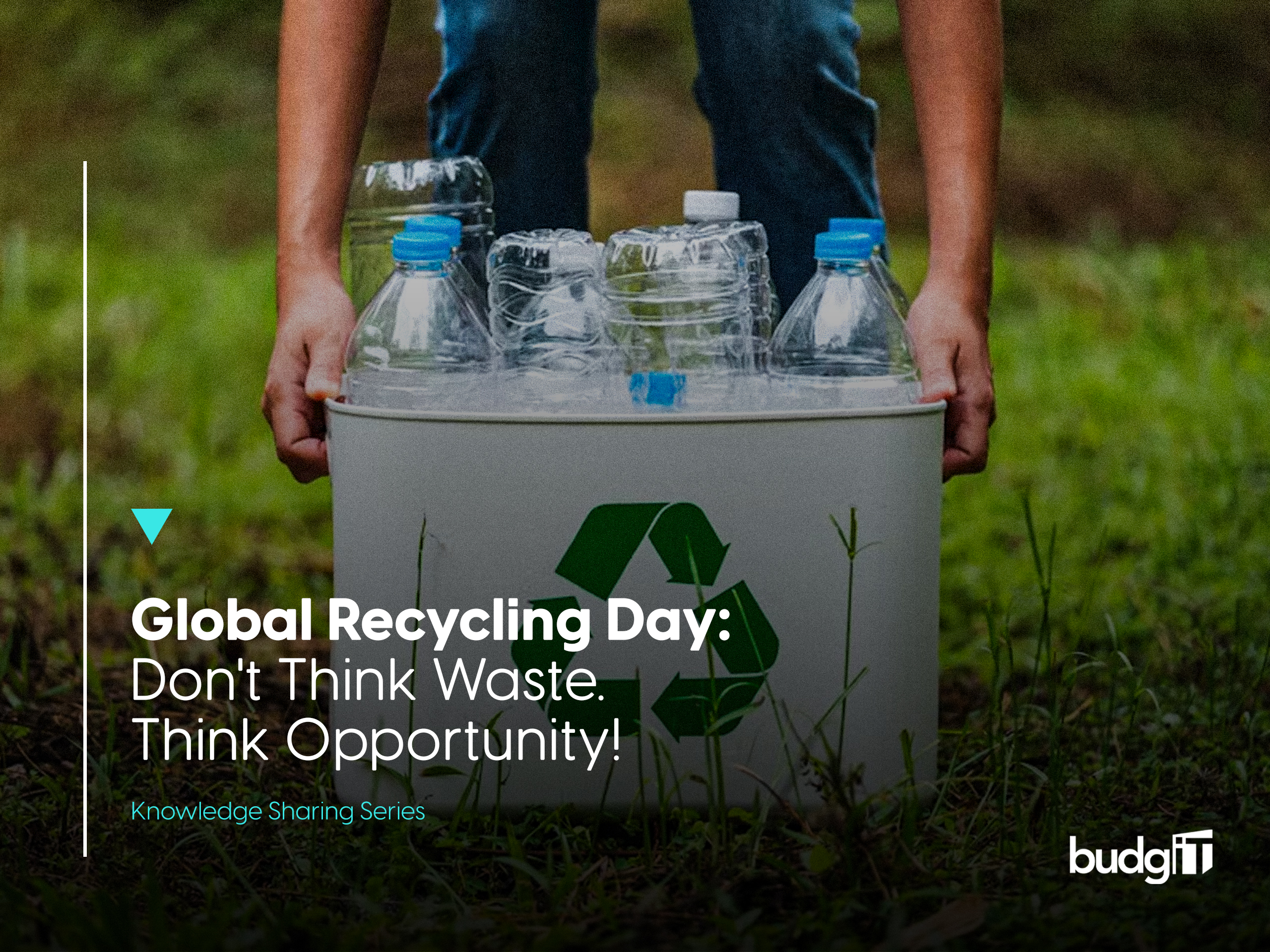
Around the world, recycling is called the “seventh resource.” Alongside natural resources like water, air, oil, gas, coal, and minerals, recycled materials represent a resource we can recover and reuse instead of throwing away. Every year on Global Recycling Day, the world is reminded that waste is not useless. Plastics, paper, metals, and glass can all be made into new things instead of harming our natural resources. That plastic bottle in your hand might seem worthless today, but through recycling it could become something entirely new: a backpack, a school desk, building materials, or even energy for a community facility.
This year’s Global Recycling Day theme, “Don’t Think Waste. Think Opportunity” challenges us to rethink and view waste as an opportunity for jobs, cleaner air, innovative products, and meaningful climate action. By recycling, we reduce the need to extract raw materials from the earth, which saves energy, reduces environmental damage, and supports more sustainable production systems. This is particularly important as Nigeria aims to reduce emissions from open burning of waste by 40%, this will be done through waste sorting, recycling, and better waste management systems, especially for plastics and other fossil-based waste, as outlined in the country’s latest Nationally Determined Contributions (NDC 3.0).
Across Nigeria, thousands of people are already turning waste into opportunity. Informal waste collectors move through households, markets, and dumpsites every day, recovering plastics, metals, paper, and glass that would otherwise pollute the environment. Their work contributes significantly to recycling efforts and supports local economies. Recognising and integrating these workers into formal waste management systems could improve working conditions while strengthening Nigeria’s recycling capacity. While methane is a powerful greenhouse gas, it can also be captured and converted into energy through technologies such as biogas systems and landfill gas recovery. For a country like Nigeria, where energy demand continues to grow, waste-to-energy solutions represent a practical way to address both environmental challenges and electricity needs.
Recycling is not just about protecting the environment. It is also about economic opportunity.
Producing aluminium from recycled materials, for example, is significantly cheaper and uses far less energy than mining new bauxite ore. Recycling industries also create jobs across the entire value chain, from collection and sorting to processing and manufacturing. When waste is handled well, reduce first, reuse next, recycle smart. We save resources, cut pollution, fight climate change, and build resilience.
The 2026 theme highlights that recycling creates opportunity for innovation, creativity, and economic growth. It is cheaper to use recycled aluminium than to mine new bauxite ore. By keeping materials in the loop, businesses save money. Furthermore, the recycling industries create jobs, from collection and sorting to processing and manufacturing, turning waste into new products, supporting livelihoods across the country.
Today is a global reminder that recycling is a collective responsibility. It is not just a local issue; it is a global movement that connects us all. Every piece of waste that we recycle properly helps us reduce our carbon footprint and prevents recyclable materials from ending up in landfills.
Together, we can turn waste into opportunity and build a cleaner, circular economy for generations to come.
So today, and every day, remember:
Don’t just think waste! Think Opportunity!
Keep your city clean. Keep Nigeria clean.